Showing posts with label Non Vegetarian. Show all posts

Thursday, 16 May 2024

Nizami dum chicken

Recipe adapted from here
Chicken- 800 gms, with bone, cut into medium size pieces

Marinade
Yoghurt= 3 tbsp
Ginger garlic paste- 1/2 tbsp
Garam masala- 3/4th tsp
Cumin powder- 1/2 tsp
Pepper powder- 1 tsp
Turmeric powder- 1/2 tsp
Chilli powder- 1 tbsp (more if you want it spicy)
Coriander powder- 1 tsp
Salt- to taste

Ghee- 1/2 tbsp
Oil- 1 tbsp
Cinnamon- 1 inch piece
Black cardamom- 1
Bay leaf- 1
Coriander seeds- 1/2 tsp
Cumin seeds- 1/2 tsp
Fried onions- 1/2 cup ( i used store bought friend onions)
Cashews- 1/4 cup, soaked in water for 15 minutes, and ground to a fine paste
Kasuri methi- 1 tsp
Coriander leaves-1/4 cup, roughly chopped.
Marinate the cut chicken with all the ingredients under marinade.

Heat ghee and oil in a pan and add the whole spices.
When they start to sizzle, add the marinated chicken and fry on medium high heat for a few seconds.
Add the fried onions, mix well and cook covered for about 5 minutes.
Once the water is released, add around 1/2 to 3/4th cup of warm water and cover and cook on medium heat till the chicken is done. Stir in between, and add more water if required.
Mix the cashew paste followed by kasuri methi.
Simmer for another 5 more minutes and once the gravy becomes thick, add the coriander leaves.
Take it off heat and cover and leave till ready to serve.
Notes: This is an excellent chicken curry, especially to make on days when you are short on time. 
Not a lot of prep to be done, just the marinade and if you have store bought fried onions, then you are sorted.
The cashew paste, brings it all together. But I'm going to try it with coconut milk next time.
I've posted a step by step reel on Instagram

Monday, 4 January 2021

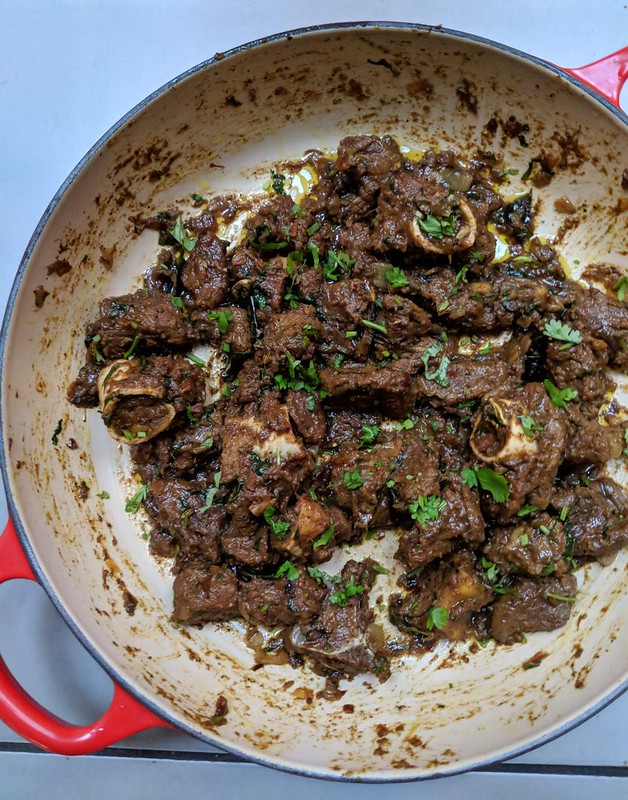
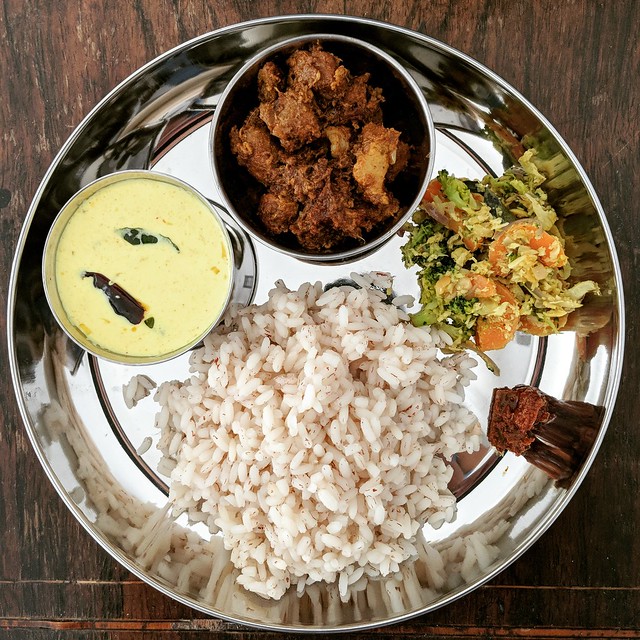
Beef mappas

Recipe adapted from here
To pressure cook
Beef- 500gms (cut into medium cubes)
Freshly ground coarse pepper- 1/2 tsp
Garam masala- 1/2 tsp
Turmeric powder- 1/2 tsp
Crushed garlic- 1 heaped tsp
Crushed ginger- 1 heaped tsp
Green chilli- 2, slit
Shallots- 12 small, roughly chopped
Vinegar- 1 tsp
Water- 1/2 cup
Salt- to taste

For the curry
Coconut oil- 2 tbsp
Cinnamon- 1 inch stick
Cardamom- 3 pods
Cloves- 3 pods
Onion- 2 big, finely chopped
Crushed ginger- 2 tsp
Crushed garlic- 1 1/2 tsp
Green chilli- 1, slit
Curry leaves- 1 sprig
Turmeric powder- 1/4 tsp
Coriander powder- 2 tsp
Freshly ground black pepper- 2 scant tsps
Garam masala- 1 tsp
Meat masala- 1/2 tsp (optional)
Tomato- 2 small, finely chopped
Potato- 1 large peeled and cut into largish cubes
Thin coconut milk- 2 1/4 cups
Fennel seed powder- 1 tsp + enough to sprinkle
Thick coconut milk- 1/2 cup
Salt- to taste

To temper
Coconut oil- 1 tsp
Mustard seeds- 1/2 tsp
Shallots- 3 to 4 small ones, roughly chopped
Dried red chilli- 1 large, broken in half
Curry leaves- 1 sprig
Mix together all the ingredients to pressure cook and cook till the beef is done. 
I cook on high heat till the steam comes and only then put the weight. Wait for one whistle, and then i reduce heat to medium low and cook for about 15 minutes. 
Once the time is up, remove from heat and wait for the steam to die on its own and then open the lid.

Heat a large pan over medium heat and add the coconut oil
Throw in the whole spices and once they become fragrant add the onions, crushed ginger, garlic, curry leaves and green chilli. Cook till the raw smell disappears and the onions turn a light golden brown.
Add all the spice powders and give a good mix. Cook this for about a minute or two.
Mix in the chopped tomatoes and cook till they turn mushy. You can cover and cook to speed up this process.
In goes the potato, give a good mix so the masala coats the potatoes.
Pour in the cooked beef along with all the stock and stir it all together.
Pour in the thin coconut milk and cook covered for about 12 to 15 minutes till the potatoes are cooked and the curry comes to a light boil.
Check for salt and add more if required and also don't forget to stir in between.
Once it comes to a boil mix in the fennel seed powder.
Cook without the lid for another 5 or 6 minutes, for the gravy to thicken.
Finally, add the thick coconut milk and heat through. It shouldn't come to a boil after you've added the thick coconut milk.
Sprinkle a little fennel powder on top, close with a lid and remove from heat.

To temper (I do this just before serving, after I've heated up the curry), heat coconut oil in a small pan and add mustard seeds.
Once they splutter, add the dried red chilli, shallots and curry leaves and cook till the shallots turn golden brown.
Pour over the curry and leave covered for a few minutes after which you can stir well and serve with bread of choice.
Its ridiculously tasty with appam, idiapppam and bread.

Notes: When buying beef make sure you buy it was a bit of fat, trust me it makes a world of a difference.
I thought the pepper flavour was a bit over powering, so next time id reduce it to about 1 1/2 tsp in the curry.
Its a really thick, delicious curry which tastes much better the next day. 

Tuesday, 5 May 2020

Mum's Kerala chicken stew

Serves 4 as part of a main meal

Chicken- 1 baby chicken (around 800gms), cut into medium size pieces, and without skin
Coconut oil- 2 tbsp
Cinnamon- 2 inch stick
Cloves- 3
Cardamom- 3
Curry leaves- 1 sprig
Onions- 2 scant cups, thinly sliced
Garlic- 2 tbsp, finely chopped
Ginger- 1 1/2 tsp, finely chopped
Green chillies- 2, slit (add more if you want it spicy)
Turmeric powder- 1/4 tsp
Coriander powder- 2 tsp
Fennel powder- scant 1 1/2 tsp (freshly ground)
Pepper powder- 1 1/2 tsp (freshly ground)
Tomato- 1 large, thinly sliced (or 1/2 tbsp tomato paste
Potato- 1 medium, peeled and cut into medium size cubes
Thin coconut milk- 2 cups
Thick coconut milk- 1/2 cup
Garam masala- 1/2 tsp
Salt- to taste

For tempering
Ghee- 1 tsp
Shallots- 2, roughly chopped
Curry leaves- 1 sprig
Meat masala- 1/2 tsp (optional, but def makes a difference)

Heat coconut oil in a pan and add the whole spices.
Once they start to sizzle add the curry leaves, onions, garlic, ginger, green chillies and some salt.
Cook on medium heat till the onions turn a light golden colour and the raw smell of the ginger and garlic disappears.
Make sure you cook the onions properly, but not to the golden crispy stage.
Add the turmeric powder and saute for a minute after which you add the coriander, fennel and 1 tsp pepper powder.
Cook till the raw smell disappears and then throw in the tomato.
Cover and cook till done, and the tomatoes are mushy and oil lightly appears around the edges.
Add the chicken and potato and mix well making sure you coat with the masala as much possible.
Pour in the 2 cups of thin coconut milk, enough salt and cover and cook for about 15 minutes on medium heat. Keep stirring in between.
Once the stew starts boiling and the chicken is almost cooked, stir in the thick coconut milk, remaining pepper powder and garam masala, and salt if needed.
Continue to cook  on medium high for another 10 minutes or so without the lid, till the curry becomes thick and oil surfaces on the top. 
Take it off the heat and keep aside.
Do a tempering with the ghee, shallots, curry leaves and meat masala (without burning the masala) and pour on to the stew. 
Cover with lid and keep aside for about 10 minutes before serving.

Notes: If using coconut milk from a can or coconut cream, remove 1/2 cup of thick milk/cream and to the rest add enough water to make it 2 cups. Stir well and then add to the curry. This is the thin coconut milk. The 1/2 cup kept aside is to be used at the end.
The stew tastes much nicer the next day
Make sure the curry gets to the 'vatticha' state and not watery. It should be thick.

Thursday, 2 April 2020

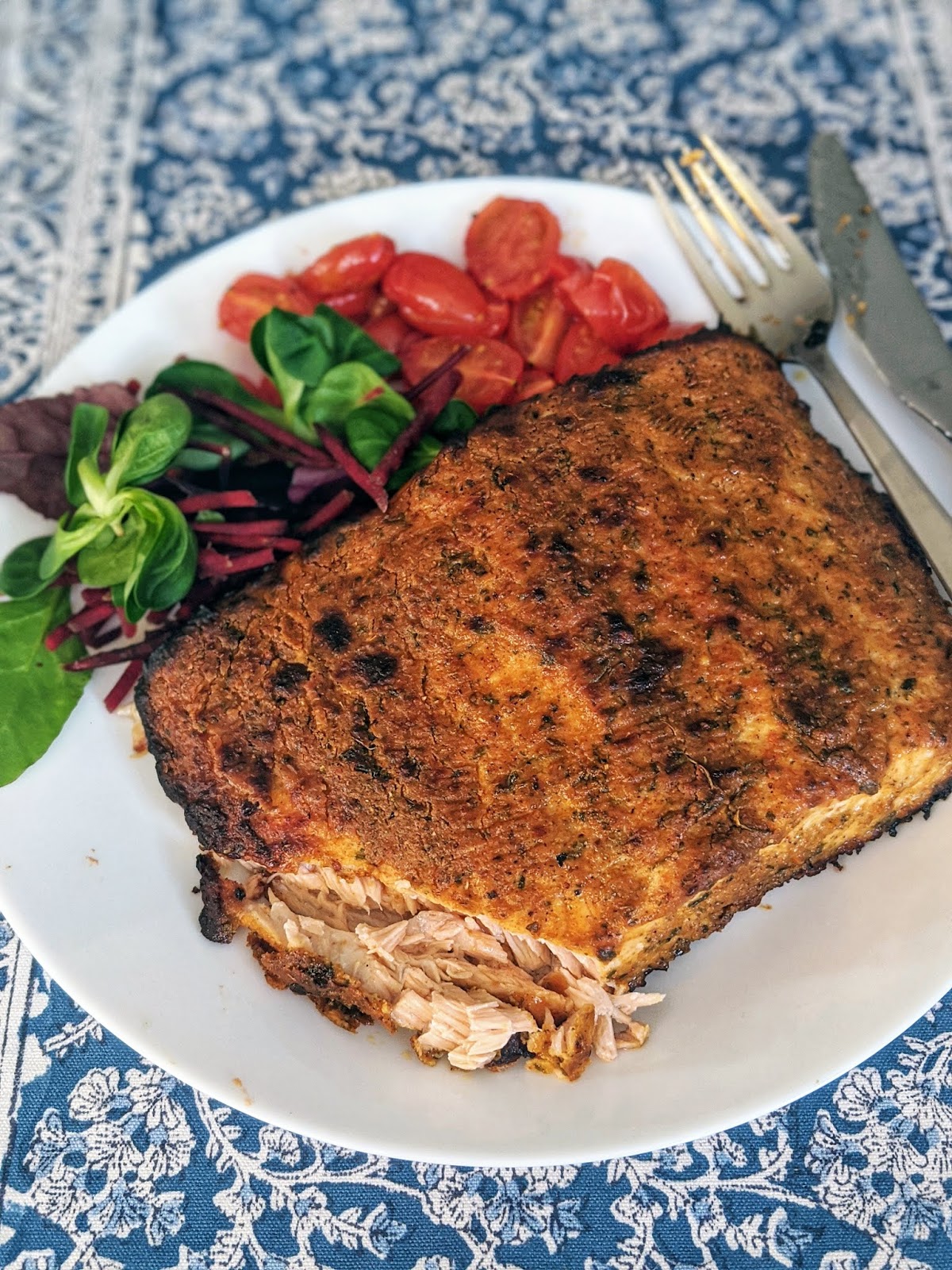
Tandoori salmon

Serves two as a main meal

Salmon fillet- 500 gms
Thick yoghurt- 3 tbsp
Chickpea/ besan flour- 1 tbsp
Ginger garlic paste- 1 heaped tsp
Lemon juice- 1 tbsp
Chilli powder- 1 1/2 tsp
Cumin powder- 1 1/4 tsp
Coriander powder- 1 1/4 tsp
Garam masala- 1/2 tsp
kasuri methi- 2 tsp, roughly crushed
Ajjwain/ Carom seeds- 1/2 tsp
Mustard seeds- 1/4 tsp
Whole pepper- 1/2 tsp
Salt- to taste
Oil- 1 tbsp + enough to grease the tray
Crush together the ajjwain, mustard seeds and whole pepper in a pestle and mortar. It can be slightly coarse.
Into a bowl add all the other ingredients along with the crushed spices and mix well.
Add salt only after you do a taste test.

Line and grease a baking tray with silver foil and place the salmon fillet, skin side down.
Generously apply the marinade on to the fillet, covering the sides as well.
Pack it on a bit, but dont over do it, so that the marinade is spilling on to the tray.
Cover and marinate for about half hour. This step is purely optional as i think seafood doesnt really require a lot of marinating time. However, i did keep it refrigerated for about 45 minutes as i got side tracked with random chores.

When ready to cook, preheat the oven to 180c.
Place the tray on to the middle shelf in the oven and bake for 10 minutes.
Then take the tray out, if your marinade has dried up, brush some oil all over the fillet.
Its highly likely that the oils from the fish would have collected on the tray, just use that same oil to moisten the fish.
Put the tray back into the oven and bake for a further 6 to 7 minutes.
Remove tray, then turn the broiler mode on your oven to maximum temperature.
Place the tray on the highest shelf, as close to the grill as possible and char the fish for about 3 to 4 minutes, to get that tandoori taste/effect.
Really you need to be careful here or you'd end up burning the fish altogether.
Serve with a side salad.

Notes: The cooking time mostly depends on the thickness of the fillet. Mine was a large 500 gms piece and so it look the time mentioned above.
If you are using individual fillets, it definitely wont take that long, maybe max 8 minuites and then grill for 2 minutes or so.
You can check if its done bu cutting a small slice and if it separates into flakes, you are good to go.
Over cooking salmon makes it dry and chewy i feel.
I had 2 tbsp of leftover marinade which i stored in the fridge and used for paneer tikka the next day.

Monday, 30 March 2020

Chinese red-braised ribs

Recipe adapted from Marion's Kitchen (serves 3 as part of main meal)

Baby back ribs- 1 kg, separated into individual ribs (I used the loin ribs from Waitrose)
Oil- 1 tbsp
Brown sugar- 3 tbsp
Dark soy sauce- 1 tbsp
Soy sauce- 2 1/2 tbsp
White vinegar- 3 tbsp
Chinese cooking wine- 2 tbsp (I only has Sake at had so used that instead)
Oyster sauce- 1/2 tbsp
Water- 1/4 cup
Ginger- 2 big slices, but thin
Garlic- 4 large pods, crushed
Spring onions- 3, white bit separated and the green bit finely chopped
Star anise- 2, small
Cinnamon stick- 1 inch piece
Cloves- 4
Dried red chillies- 2 (optional)
Salt- to taste (if necessary)
Maggi seasoning sauce- a few dashes (optional)
Sesame seeds- 1/4 to 1/2tsp

Place the ribs in a large saucepan and fill with room temperature water to cover them properly.
Bring to a continuous simmer over high heat and using a slotted spoon remove all the frothy bits from the surface of the water.
Simmer for a further 3 to 4 minutes and then drain the water.
Rinse the ribs well in clean water and transfer to a bowl.
Heat oil in a large wok and throw in the brown sugar. 
Wait for it to melt and caramelise a bit.
Add the pork ribs and give a good mix to coat them with the sugar.
Do so for about 3 to 4 minutes until the ribs are a light brown in colour.
Pour in all the liquids one after the other including water and then the ginger, garlic, spring onions, and whole spices.
Mix well and cover and cook on medium heat for about 25 minutes, making sure you give it a mix half way through.
If even after 25 minutes your ribs arent cooked through, continue cooking till the meat comes away from the ribs. Mine took about 35 minutes.

Remove the ginger and whole spices (whatever you can find), increase heat a bit (not too high) and stir the ribs till they are well coated with the liquid and starts to become sticky. 
Be careful not to burn them at this point. You need to keep an eye on them.
Once there is no more liquid, add the maggi seasoning, give a final mix and transfer on to a serving dish.
Garnish with the green bits from the spring onion and sesame seeds and serve warm.
Notes: The ribs in the original recipe are way shorter as she says shes sourced them from a Chinese store. I couldnt get hold of them, so the next best were these loin ribs.
Ive also tried them with the big ribs, but these are definitely better as the sauces get distributed well and coats them properly than the big ribs.
Salt- if your soy is salty enough then you wont need to add any. I did need to add a bit.
If you end up over cooking the ribs they become chewy and dry. Make sure that doesnt happen.
Ive tried the exact same recipe with pork belly and its absolutely fabulous, maybe even better than ribs :)

Thursday, 12 March 2020

Madurai kari dosa

Makes 6 to 7
Dosa batter- 1 to 1 1/2 cups (not too loose)
Ghee/ sesame oil- couple of teaspoons
Eggs- 2 small
Mutton kheema- around 3/4 cups
Salt- to taste
Pepper- to taste
Coriander leaves- 3 to 4 tbsp, finely chopped

Make the mutton kheema as per this recipe. Use mutton mince and omit the potatoes.
For the dosa, you wont need 500gms mince, so for me this is mostly a what-to-do-with-leftover-kheema kinda dish.

Beat the eggs till slightly frothy.

Place a dosa tawa on medium heat and pour in one ladle full of the batter. Dont spread it too much, it must be thick, like a kal/ thattu dosa.
Cover with a lid, and just when you start seeing the bubbles, drizzle some ghee/oil along the edges.
Reduce the heat a bit and add about 2 to 3 tsp of the beaten egg, spread it carefully.
Season with salt and pepper and top with 2 to 3 tsp of kheema followed by a sprinkling of coriander leaves.
Press the meat slightly using a spatula and cook for about a minute,
Carefully flip the dosa and cook for another minute or so.
Make sure you dont burn the kheema, it should be a fried consistency.
Serve hot with some empty gravy on the side.

Notes: When i had this at the legendary Konar Mess in Madurai as part of the food walk i did, they drizzle a bit of mutton curry as well on top of the egg and then top with the kheema.
Also, the dosa is really thick.
The kheema on the dosa must be slightly fried and not burnt. So when its flipped, make sure you dont keep it on for a long time.

Tuesday, 18 February 2020

Chettinad pepper chicken (dry)

Recipe adapted from Rick Stein's India


To lightly roast and grind
Fennel seeds- 1 1/2 tsp
Whole peppercorn- 1 1/2 tsp
Cumin seeds- 1 1/2 tsp
Coriander seeds- 1 1/2 tsp

Chicken with bone- 700gms, cut into small pieces
Oil- 2 tbsp
Fennel seeds- 1/4 tsp
Cinnamon stick- 1, 2 inch piece
Onion/shallots- 1 1/2 cups, roughly chopped
Curry leaves- 2 sprigs
Ginger garlic paste- 2 tsp
Turmeric powder- 1/4 tsp
Kashmiri chilli powder- 1 1/2 tsp
Coriander leaves- 1/4 cup, finely chopped
Salt- to taste

Lightly roast all the whole spices and once cool, grind to a powder. Keep aside.
In a large pan , heat the oil and throw in fennel seeds and cinnamon. 
Let it sizzle for a couple of seconds at which point throw in the onions and one sprig of curry leaves.
Cook till the onions turn a light brown. Make sure you take time and do this step or else your curry may end up being sweet.
Once the onions turn light brown, add the ginger garlic paste and cook till the raw smell disappears.
In goes the turmeric powder and chilli powder. and salt Saute for about 2 minutes.
Add the cleaned chicken pieces and mix well so its coated in the masala.
Stir in 1/4 cup water and cover and cook for about 20 minutes, or till the chicken is done.
Open lid and mix in the ground masala powder. Saute well to coat the chicken.
Cook till almost all the water has been evaporated, and you see oil along the sides.
Add the remaining sprig of curry leaves and coriander leaves and give one final mix.
Serve warm with rice.

Notes: The dish has a nice level of spice, but next time ill probably increase the peppercorns to about 2 tsp. The pepper didnt stand out enough i though.
Shallots definitely make a difference so try and use that if possible.
Rick Stein's India is one of my absolute favourite books. I can just sit and look at the pictures, if not anything else :)

Tuesday, 11 February 2020

Meat pattichu varuthathu

Adapted from Mrs K. M Mathew's book Flavours of the Spice Coast
 Beef- 1 kg*, cut into medium size pieces

To roast and grind
Fennel seeds- 1 1/2 tsp
Cinnamon stick- 2 inch piece
Cloves- 6
Peppercorn- 2 tsp
Kashmiri chilly powder- 2 tsp
Turmeric powder- 1 tsp
Coriander powder- 3 1/2 tsp

Ginger garlic paste- 2 tsp
Vinegar- 2 tsp
Salt- to taste

Coconut oil- 1 tbsp
Mustard seeds- 1 tsp
Curry leaves- 2 sprigs
Shallots- 10 to 12, roughly chopped
Ginger- 2 tbsp, sliced
Garlic- 5 cloves, sliced

Dry roast all the ingredients in the roast section for about 3 to 4 minutes on medium heat. Keep stirring continuously or else you will end up burning the spices.
Once slightly cool, grind them finely.
Remove 1 tsp of this powder and to the rest add the ginger garlic paste, vinegar and salt.
Marinate the meat with this mix, and keep aside for an hour or so. 
Transfer the meat to a pressure cooker and cook with about half cup water till done. 
(I close the lid and cook on high till steam comes after which i put on the weight and wait for the first whistle. Once the first whistle is out, i reduce heat to medium and cook for about 15 minutes. For the beef we get here, this method works well).

Open the pressure cooker, and if there is a lot of liquid, evaporate most of it on high heat, leaving about a quarter cup of liquid with the meat.
Heat coconut oil in a large wok and add mustard seeds.
Once they splutter, add curry leaves, shallots, sliced ginger and garlic and cook till slightly brown and the raw smell from the ginger and garlic disappears.
Add the reserved tea spoon of masala powder to the onions and saute for a few minutes.
Finally, tip in the beef along with the gravy and fry on medium heat till dark and semi dry. I dont like my beef too dry, but with some wet masala smothering it.
The masalas will start leaving the sides of the pan, and there will be some oil visible around the pan. At this point, you can add some more fresh curry leaves, give a final mix and take it off the flame.
Serve hot with Kerala porotta or rice and moru kachiyahu.
Notes: The preparation is just moderately spicy, you can increase the pepper and red chilly powder to suit your taste
*The beef i used here is a roasting joint which has a nice layer of fat. Please do yourself a favour and use beef with a bit of fat, for this recipe. Trust me, it makes a difference.
I also added a few beef short ribs just to see what its like. I personally think it didnt make too much of a difference, however if it was a curry i was making, it would have amped up the taste. 
You can do the entire prep in a normal pot, but cooking time is longer and also make sure you add at least 2 to 3 cups of water to the beef while cooking, so it doesnt dry out.
You can try the same with mutton as well, and it tastes great.

Sunday, 1 September 2019

Naadan chicken chilli roast

Recipe adapted from here
Chicken (with bone)- 650gms
Coconut oil- 2 tbsp
Curry leaves- 3 to 4 sprigs
Small onions (shallots)- 3/4th to 1 cup, crushed (refer notes)
Red chilli flakes- 3 tbsp (refer notes)
Soy sauce- 1/2 tbsp (optional)
Salt- to taste
Heat coconut oil in a frying pan and throw in the curry leaves.
Fry till slightly crisp and then add the crushed small onions.
Saute for about 4 to 5 minutes and then add the red chilli flakes.
Cook on low to medium heat until the mix turns a dark brown in colour. 
Make sure you don't burn the flakes, and keep mixing in between. This step is important as it determines the final colour of the dish.
The mix should be a dry one, as opposed to a wet masala.
Tip in the chicken, add enough salt, mix well with the masala, close and cook for about 10 minutes.
By now water would have released from the chicken, stir well, cover and cook till the chicken is almost done.
Then open lid and on high heat, saute the chicken till all the water has evaporated and the masala sort of clings on to the meat.
Reduce heat a bit and add the soy sauce. Roast the chicken till all the masala coats the chicken and the colour turns a dark brown. This can take a while, about 10 to 15 minutes. Don't skip this step though.
Add a few torn curry leaves, give a final mix and transfer to serving plate.
Notes: I've used chicken wings here, but you can use any part really. If using a whole chicken, make sure you cut them into small pieces. I've also tried this with boneless chicken thighs and it works great when you want to serve as an appetiser with drinks.
Using small onions (cheria ulli/shallots) make all the difference. Using a pestle and mortar gently crush them. If you don't have one, then roughly slice each small onion into two or so.
That said, I've made this using normal onions and it tastes fine as well. I've sliced them to the size of a small onion and used that. Haven't bothered crushing them.
Use dried Kashmiri chilli flakes for this, as you need about 3 tbsp and you don't want it to be unbearably spicy. I get ready made chilli flakes here and I've used that, but you can just dry roast whole Kashmiri chilli till crisp and roughly grind it to get flakes.
Soy sauce is my personal addition and i love the flavour, but it tastes perfectly fine without the soy as well.
I sometimes add a handful of coriander leaves at the end instead of the curry leaves.

Thursday, 14 February 2019

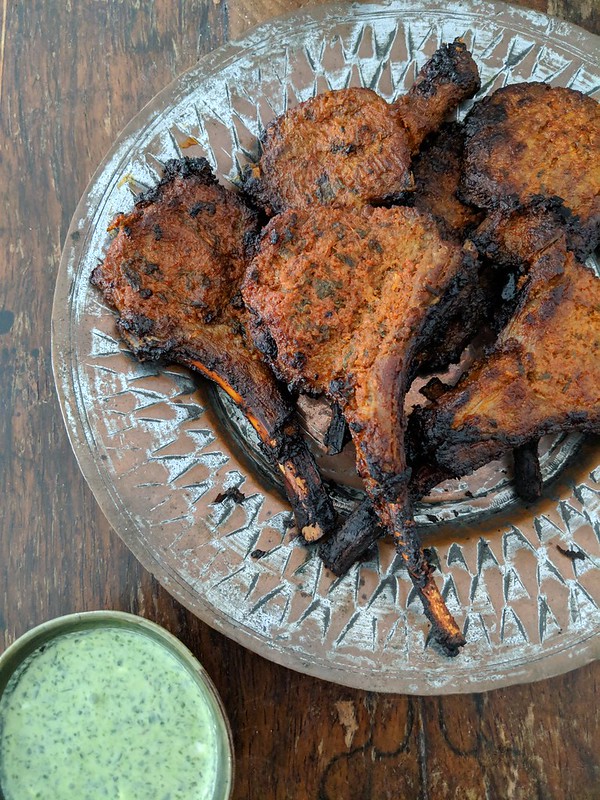
Indian grilled lamb chops

Recipe adapted from here
IMG_20190214_155717 
Lamb chops/ cutlets- 1/2 kg (around 6 of them)

Marinade
Greek yoghurt- 2 tbsp
Ginger garlic paste- 2 tsp
Kashmiri chilli powder- 1 tsp
Chilli powder (spicy variety)- 1/2 tsp
Garam masala- 1/2 tsp
Cumin powder- 1/2 tsp
Coriander powder- 1/2 tsp
Tomato paste/puree- 1 tsp
Coriander leaves- 2 tbsp, finely chopped
Salt- to taste

Butter- 1/2 tbsp, melted, to baste

Wash and pat dry the lamb chops.
Trim off as much of the fat possible (refer notes)
Flatten the chops with a mallet, or use your knife to hammer the meat (with the sharp side) so you create incisions on the meat but it doesn't cut through. Do rapid movements like you are using a mallet. This helps with making the meat tender. If you cant figure any of these, use your palm to flatten the meat.
Mix together all the ingredients for the marinade and rub all over the lamb chops.
Cover and marinate in refrigerator for at least 2 hrs. Overnight is best.
IMG_20190214_155653
When ready to cook, preheat oven to 200C and line a baking tray with heavy duty silver foil.
Brush a bit of the butter on the foil and arrange the lamb chops without touching each other.
Bake for 15 minutes.
Take the tray out, and baste with melted butter.
Change the oven setting to broil/grill mode on the highest setting. Mine is at 250C. Wait for the oven to preheat to the setting.
Place the tray right under the grill for 3 to 4 minutes.
Take the tray out, flip the chops, baste with melted butter and place back under the grill for another 3 to 4 minutes.
Remove and keep aside for about 5 minutes before you serve. 

Notes: If you get the lamb cutlets from the supermarket then it will usually have a layer of fat, try and take that off. However, from the Indian butchers, you will most probably get them without the fat. 
The grilling time depends on the grill power. If its a low power one, then grill for another 3 to 4 minutes. The chops need to have a charred effect and must also be cooked through. That said, be careful to not burn them.
The chops go really well with Mint coriander chutney.

Monday, 4 February 2019

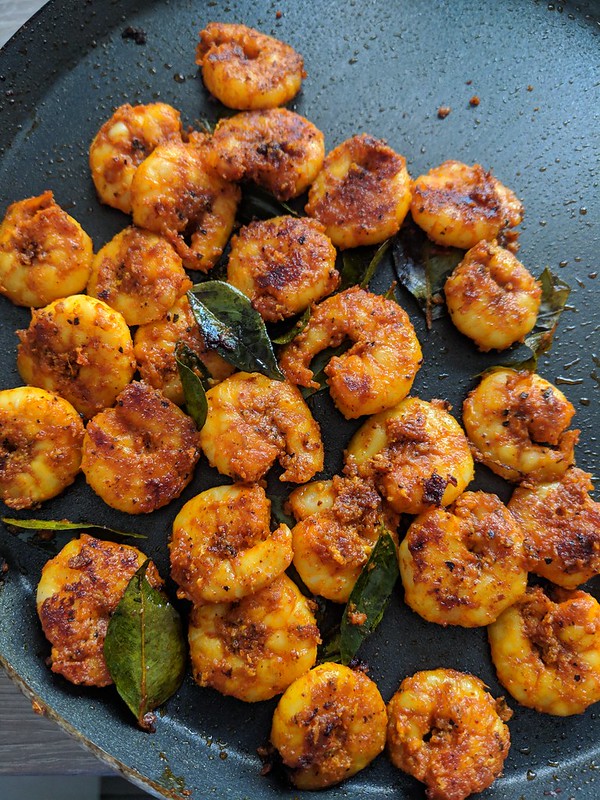
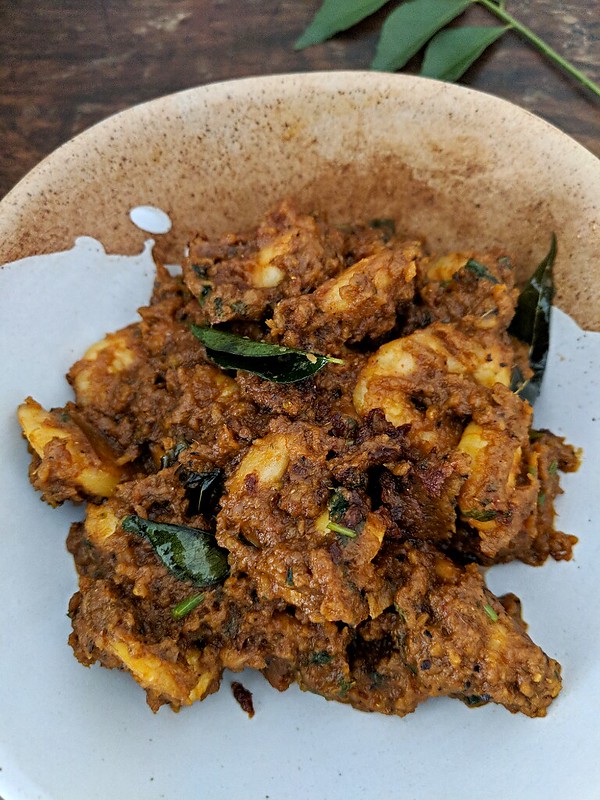
Tawa fried prawns

Serves 2 as a side dish
IMG_20190203_124030 
Raw prawns- 250 gms
Kashmiri chilli powder- 1 tsp
Turmeric powder- 1/4 tsp
Ground pepper- 1/4 tsp
Ginger garlic paste- 1/2 tsp
Salt- to taste

Coconut oil- 1 tbsp
Curry leaves- a generous amount

Wash and clean the prawns if required and then pat dry. You need to make sure they are dry or else the masala is not going to stick to it.
Make a paste with all the masalas using a wee bit of water. The mix shouldnt be watery. Add a 1/4 tsp at a time until you get a thick paste.
Rub this mix onto the prawns as evenly as possible. You can marinate it for a bit but i didnt have time so used it immediately.
Heat coconut oil in a tawa (a flat pan, like a pancake pan or dosa pan. If its cast iron even better) on almost high heat and place the prawns in one layer.
Cook for about 2 minutes or so and then flip the prawns and cook for a further 2 to 3 minutes. If the prawns ooze out a lot of water, then increase heat to high and evaporate the water. If there is water then the prawns end up steaming in them rather than frying.
Once the water has evaporated throw in a handful of fresh curry leaves and mix it with the prawns. If at this point you feel the pan needs a bit more oil, add a dash.
Roast for a few more minutes till they start to brown, but dont cook for too long or the prawns will turn rubbery.
Squeeze some lime juice if you like, and serve hot.

Notes: Its only mildly spicy, so increase the chilli powder and pepper powder.
Coconut oil gives it a distinct (in a good way) taste, if not that then ghee, then butter and then vegetable oil :)
If you are doubling the recipe, then fry the prawn in batches and avoid over crowding the tawa. Prawns should be in one layer.

Monday, 19 November 2018

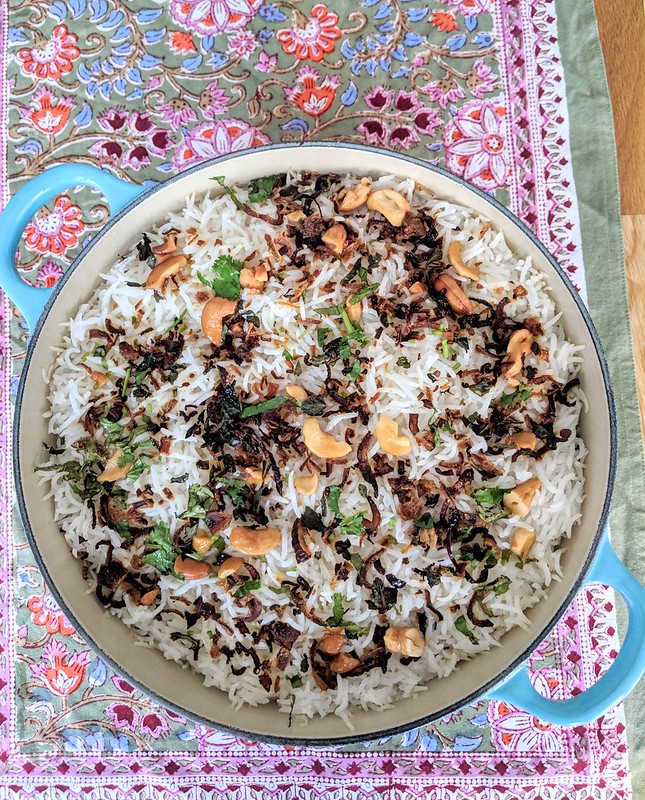
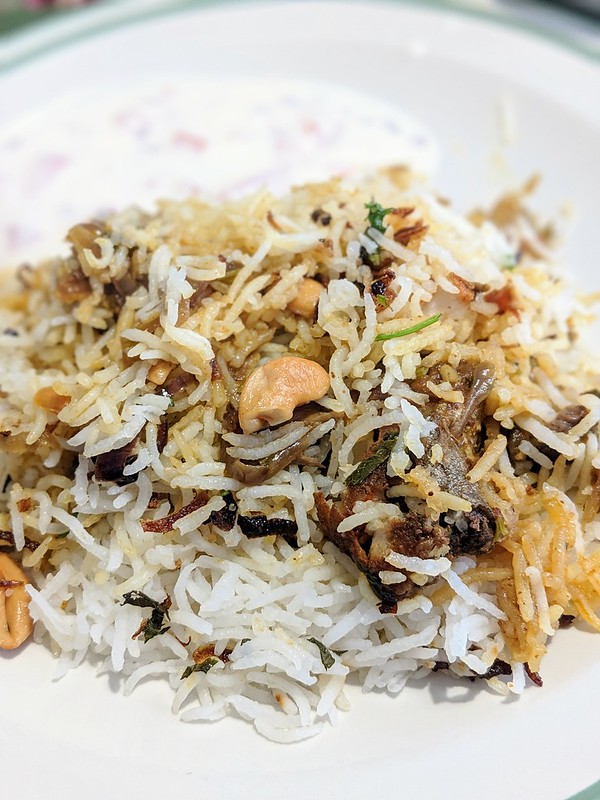
Kerala fish biryani

Recipe adapted from here
IMG_20181117_122434
Fish- 500 gms (any firm, fleshy fish like salmon, tilapia can be used, but ideally King fish, which is what I've used)

To marinate
Kashmiri chilli powder- 2 tsp
Turmeric powder- 1/2 tsp
Lemon juice- 1/2 tbsp
Salt- to taste
Oil- enough to shallow fry the fish

For fish masala
Ghee- 1 tbsp
Oil- 1 tbsp (use leftover oil from frying the fish)
Onions- 3 medium, thinly sliced
Ginger- 1 large piece, around 1/2 tbsp
Garlic- 6 to 8 pods
Green chillies- 2 to 3 (increase as per heat level)
Turmeric powder- 1/2 tsp
Garam masala- 1/2 tsp
Kashmiri chilli powder- 1 tsp
Freshly ground black pepper- 1/2 tsp
Tomato- 1 1/2 finely chopped (if they are small use two, mine was pretty big)
Coriander leaves- 1/2 cup 
Mint leaves- 1/4 cup 
Yoghurt- 1 1/2 tbsp
Thick coconut milk- 1/4 cup (this is purely optional, i love the coconut milk taste)
Warm water-  3/4th cup
Salt- to taste

For the rice
Basmati rice- 2 1/2 cups
Cinnamon- 1 inch stick
Cardamom- 4 pods
Cloves- 4
Bay leaf- 1
Ghee- 1 tsp
Lemon juice- 1 tbsp
Water- enough to cook the rice
Salt- generously

To layer
Cashew nuts- a handful
Onion- 1 small, thinly sliced
Coriander leaves- 2 tbsp
Mint leaves- 1 tbsp
Ghee- 2 tbsp + enough to fry the cashew and onion
Coconut milk- 5 tbsp
00100dPORTRAIT_00100_BURST20181117122718860_COVER
Cut the fish into relatively large slices and wash and clean with salt and vinegar to remove some of the smell.
Marinate with all the ingredients under the marinate section and keep aside for about 20 minutes.
Also wash the rice and soak in water for around 20 minutes.
Crush the ginger, garlic and green chillies in a blender or using a pestle and mortar.
Heat some ghee in a shallow pan and fry the cashew nuts first till golden brown followed by the onions, also to a golden brown and drain on to paper towels. Be careful to not burn them. (I used red onions which is why they look almost black, but they are not burnt :)
Heat oil in a pan and shallow fry the fish, in batches if needed. You dont need to completely cook the fish, just crisp them on the outside. Drain on to paper towel and keep aside.

Heat ghee and some of the oil from frying the fish in a large pan.
Saute the onions with a little bit of salt, till they turn light golden. Make sure you cook the onions properly or they will turn the curry sweet.
Add the crushed ginger garlic chilli paste and cook till the raw smell disappears.
In goes the turmeric, chilli, garam masala, pepper powder and salt. Cook them for a couple of minutes and add a dash of water if you feel the masala is dry.
Stir in the chopped tomatoes, 1/4 cup water and cook it covered till the oil slightly starts to appear around the edges. 
in goes the coriander and mint leaves, mix well.
Add the yoghurt and mix it all well.
Add the coconut milk and around 1/2 cup water and mix very well. Check salt and add if needed.
Slowly add the fish pieces and cover with the masala as carefully as possible without breaking the fish. Add a bit more water if you feel that the masala is too thick.
Cook for about 5 to 6 minutes uncovered, till the gravy has thickened and the fish pieces are smothered all over the fish.
Keep this masala aside while you sort out the rice.

While the fish is cooking in the masala, put enough water to boil along with the whole spices.
The pot used should be big enough and water quantity quite a bit.
Add salt in such a way that the water tastes salty, only then will the rice taste nice.
Once the water comes to a rolling boil, pour in the lemon juice and then carefully add the drained rice into it. Mix well.
Now this is the tricky part- cooking the rice till its only 3/4th done.
With the basmati rice i used, i got to this stage at 8 minutes. Do not over cook the rice and then it turns into a mushy biryani.
Add the ghee and give a good stir and then drain.
What i did was instead of draining it into the colander, i used a sieve to scoop the rice out of the water and put into the colander so there wasnt a lot of water that needed to be drained as i was time constrained.

Assembly:
Generously grease a large pan with ghee, up the sides as well and place a layer of the fish and masala (as even as possible).
Top with half the rice, again as evenly as possible and sprinkle half of the coconut milk on the rice.
Sprinkle half the mint and coriander leaves and the fried cashew and onion over the rice and finally drizzle half the ghee as well.
Top with the remaining fish and masala followed by rice layer with all the leftover toppings.
Cover with foil and close with a tight fitting lid.
You can either do the usual dum process on the stove top for about 20-25 minutes on low heat or do it in the oven, which is what i did, at 180c for 25 minutes. (While the rice is draining, you can preheat the oven)
Once done, keep to slightly cool for about 10 minutes and then dig in.

Notes: I made the fish masala the previous day and that made life so much easier. I also felt that the masalas were caught on to the fish much better.
I used my Le Creuset for the entire process and it was a breeze, it went from stove top to oven to table t refrigerator.

Thursday, 4 October 2018

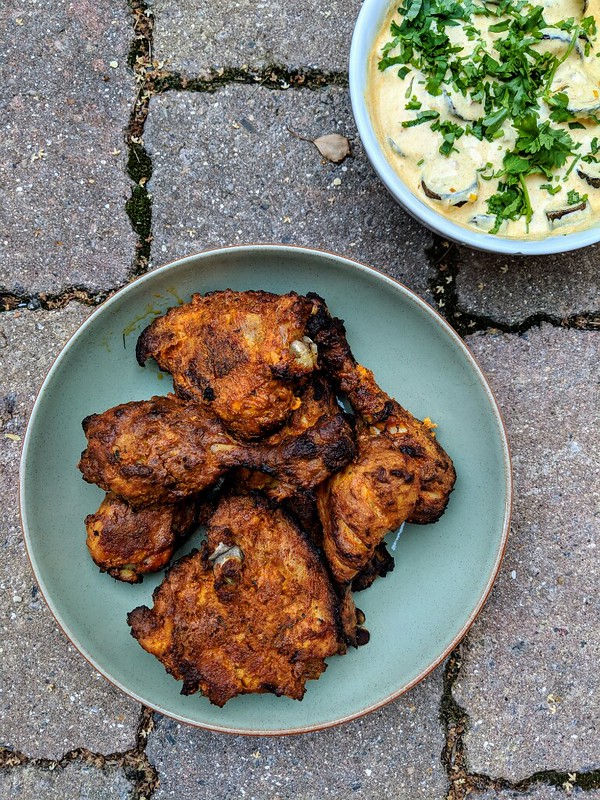
Tandoori chicken

Recipe adapted from here

a0231926-06d9-4e67-8e77-bfc6aa63a9bc
First marinade
Chicken 1kg, with bone (i used skinless leg and thigh pieces, comparatively large pieces))
Kashmiri chilli powder- 1/2 tbsp
Ginger garlic paste 1tbsp
Lemon juice 1 tbsp
Salt- to taste

Second marinade
Yoghurt- 200gms
Ginger garlic paste- 2 tbsp
Kashmiri chilli powder- 2 tsp
Turmeric powder- 1/2 tsp
Garam masala- 1 tsp
Black salt- 1/2 tsp
Mustard paste - 1 tsp (I used English mustard)
Kasoori methi- 1 tsp
Cumin powder- 1/2 tsp
Oil- 2tbsp
Salt- to taste

Put slits in the chicken pieces and marinate with all the ingredients in the first marinade.Rub it into the pieces well and in between the slits.
Keep covered in the refrigerator for an hour.
Get the second marinade ingredients ready by whisking together all the ingredients in a small bowl.
Bring out the chicken after an hour and pour the second marinade over it. Nicely massage the marinade on to the chicken and keep covered in the refrigerator overnight for best results, or at least for 3 hours minimum.
When ready to cook, bring the chicken to room temperature and preheat oven to 250C (the highest on your oven).Line a baking tray with heavy duty foil and brush a thin layer of oil on it.
Place the chicken pieces and whatever marinade leftover on to the tray and place in the oven for 7 minutes.
Then reduce heat to 220C and cook for another 10 minutes.
Take the tray out, turn the pieces over and cook for another 10 minutes.
Remove the tray from the oven and change oven setting to grill/broiler mode on highest temperature.
Baste the chicken pieces with oil and place under the broiler for 5 minutes. (Watch well, as it could burn the chicken. Anytime between 3 and 5 minutes should be fine. This is just to char the chicken for that tandoori effect)
Remove and serve with coriander-mint chutney

Notes: Use thick drained yoghurt, so that the marinade sticks to the chicken. I used thick set yoghurt, but squeezed out the water content by hanging it in a muslin cloth.
You are using salt in the first marinade and black salt in the second, so taste before you add more salt.
If you cant find black salt, normal salt is fine.
Of course oven cooking times will vary depending on the size of the chicken pieces. Adjust a few minutes here and there accordingly. It should be anywhere between 20 and 30 minutes including broiler time.

Monday, 1 October 2018

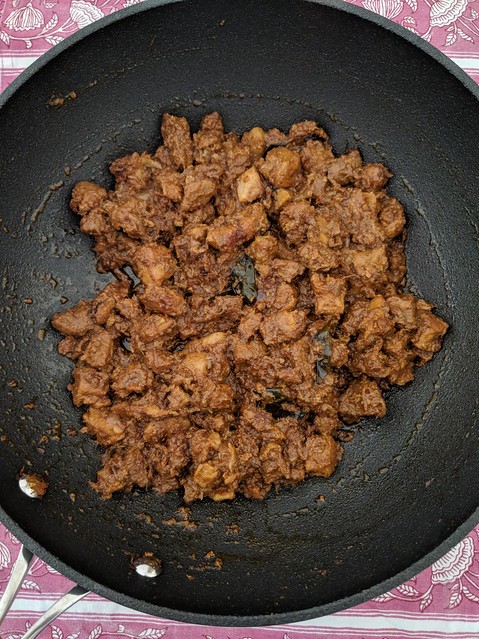
Mutton sukka/chukka

Recipe adapted from here (serves 3 or 4 as part of main meal) 
IMG_20181001_183901
Mutton- 500gms (with bone)

To grind
Cumin seeds- 1 1/2 tsp
Coriander seeds- 1 1/2 tsp
Peppercorns- 1 1/2 tsp
Dry red chilli- 2
Indian shallots- 4, small, roughly chopped
Ginger garlic paste- 2 tsp
Turmeric powder- 1/4 tsp
Salt- to taste

Ghee- 1 tbsp
Cinnamon- 1 inch stick
Cardamom- 2
Cloves- 2
Fennel seeds- 1/2 tsp
Onions- 2 small/ 1 large- finely chopped
Curry leaves- 2 sprigs
Coriander leaves- 1/4 cup
Garam masala- 1/2 tsp
Ghee- 1 tsp (optional)

Grind together the cumin, coriander seeds, peppercorns and dry red chilli to a powder.
Add the shallots and ginger garlic paste, a tbsp or so of water and grind to a paste. Don't add too much water.
Marinate the mutton with the ground mix, turmeric and salt and keep aside for half an hour or more if you can.
Pressure cook the mutton with around 1/3rd 1/4 cup water till done(don't add too much water as you want a dryi-sh consistency once cooked).
If at all there is a lot of water, evaporate it off on high heat till about 1/4 cup is remaining.

In a frying pan, heat the ghee and infuse with cinnamon, cardamon, cloves and fennel.
Throw in the onions and half the curry leaves and saute on medium heat till they turn golden brown. Make sure its not too dark and burn. You need to saute the onions well, or else the curry would be sweet.
Pour in the mutton along with the stock and mix with the onions.
Add the coriander leaves and salt if needed and cook for a couple of minutes on medium heat till the mutton pieces are well coated in the masala and the oil starts to separate. Keep stirring in between.
Sprinkle the garam masala, a tsp of melted ghee and the remaining curry leaves, give a final mix and keep covered for a few minutes, after which you can serve with steamed rice, roti or even appam.

Notes: The original recipe required you to cook the mutton in coconut milk. I skipped it and it was just as good.
Increase the amount of pepper to 2 tsp and add one more chilli if you want it spicier. My version is mildly spicy, and the heat comes from the pepper mostly.
If you have enough shallots, cook the entire thing in that instead of onions. Tastes really good.
You would know how long your mutton would take to get cooked, but what i do is, cook on high heat in the pressure cooker till the first whistle and then reduce heat to medium and cook for another 20 minutes. I'd open the cooker only once the steam has completely died down on its own.

Friday, 31 August 2018

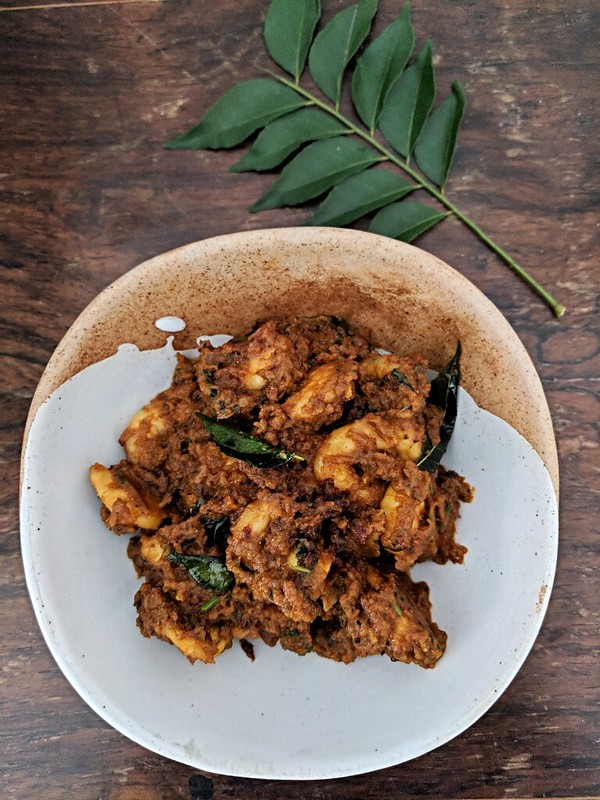
Prawn thokku

Recipe adapted from here

db6839aa-c08b-4cd7-a68c-fcdd2b797185
Prawns- 250-300 gms
Onion- 1/2 cup, roughly chopped (use shallots for enhanced taste)
Garlic- 4 pods, peeled and roughly chopped
Green chillies- 2, chopped (add more for more heat)
Ginger- 1 1/2 inch piece, peeled and roughly chopped
Tomato- 1 big, roughly sliced
Black peppercorns- 1 tsp
Fennel seeds- 1/2 tsp
Grated coconut- 1 1/2 tbsp
Cinnamon- 1 inch piece
Cloves- 4
Curry leaves- 2 to 3 sprigs (the more the better)
Coriander powder- 1 tbsp
Kashmiri chilly powder- 2 tsp
Turmeric powder- 1/4 tsp
Water- 1/4 cup
Oil- 4 tbsp
Salt- to taste
Coconut oil- 1 tsp (optional)
Lemon/ lime juice- approx. 1 tsp
Coriander leaves- to garnish 
da72a9d4-0740-45c6-a973-47e36fa40949
Place a pan over low-medium heat and add around 1 tbsp of oil.
Once hot, throw in the onion, garlic, green chillies and ginger and sauté till they turn golden brown, but not crisp brown. Keep stirring in between to avoid the onions getting burnt, which would affect the overall taste of the thokku.
Add the chopped tomato and continue cooking till they turn soft.
In goes the peppercorns, fennel seeds and grated coconut. Stirring continuously, cook the mix for about 2 to 3 minutes.
Transfer the contents into a bowl and leave aside to cool sufficiently.
Once cool, use a blender/ grinder to make a smooth paste. Try and avoid adding water, but if necessary a tsp or so wont do any harm.
Place the same frying pan back on medium heat and add the remaining oil.
Once hot, throw in the cinnamon, cloves and curry leaves. Stir for a couple of seconds till you get than nice aroma of spices.
At this stage tip in the ground ingredients and cook for a few minutes. It might splutter a bit in the beginning, so be careful.
Add the coriander, chilly, turmeric powders and salt, mix it all into the ground paste and cook, stirring on and off till the oil starts to surface.
This step is important and it needs to be done on medium heat. The masala must turn a deep red.
Throw in the prawns and mix well, so its all coated in the masala.
Pour the 1/4 cup of water and bring to a boil.
Reduce heat and simmer till the prawns are cooked and the water has all been absorbed. 
At this stage, you can drizzle the coconut oil (if using) and roast the prawns for a couple more minutes, or till the masala becomes dark and completely dry. 
Stir in the coriander leaves, and just before serving squeeze some lemon juice over it and serve with some chilled beer or hot rice.

Notes: Add more green chillies to make this dish really spicy. Honestly, its much tastier with a bit of heat.
Make sure you dont overcook the prawns. 

Wednesday, 11 July 2018

Kerala pork roast/masala

Recipe adapted from here 
IMG_20180707_131636 
To pressure cook
Pork- 1 kg, cut into slightly big pieces, say about 1-1/1/4 inch cubes* (refer notes)
Sliced onion- 1/4 cup, sliced into thin juliennes
Ginger garlic paste- 1/2 tbsp
Kashmiri chilli powder- 1 1 /2 tsp
Pepper powder- 1/2 tsp (add more if you would like it spicier)
Coriander powder- 1 1/2 tsp
Turmeric powder- 1 tsp
Salt- to taste
Curry leaves- 1 sprig

To roast
Coconut oil- 2 tbsp
Onion- 1 cup, sliced into thin juliennes
Curry leaves- 1 big sprig
Ginger garlic paste- 1 tbsp
Turmeric powder- 1/4 tsp
Coriander powder- 1 1/2 tsp
Kashmiri Chilli powder- 1/2 tsp (add more if you want it spicier)
Pepper powder- 1 tsp (add more to enhance the taste, but remember it would make the dish spicier)
Garam masala- 1 tsp
Salt- to taste

To dry roast
Coconut oil- 1/2 tbsp
Meat masala- 1 tsp
IMG_20180704_162327
Into a pressure cooker add the sliced pork along with all the other ingredients listed below.
Mix well (get in there and use your hands), till the masalas are almost evenly coated on the pork pieces.
Add 1/4 cup water and cook on high till the first whistle comes and then reduce heat to medium and cook for another 15 minutes*. Take off heat and open only after the steam subsides.
There should be some gravy along with pork, but not a lot. If you feel its too much, place the cooker back on heat and cook on high heat till a bit of the water evaporates.
Give a good stir and keep aside.

In another deep, heavy bottomed pan, heat the coconut oil and throw in the onions and curry leaves.
Keep heat on medium and saute till the onions turn light golden (not to crisp consistency, but still cooked well), at which point you add the ginger garlic paste.
Cook till the raw smell disappears.
Add the turmeric powder, stir for a few seconds, followed by coriander powder, chilli powder and pepper powder. If you feel that the pan is too hot and the masalas would burn, add a splash of water or the gravy from the cooked pork.
Tip in the entire contents of the pressure cooker into the pan and on high heat, mix everything together.
Reduce heat to medium, mix in the garam masala, and close and continue cooking for about 10 minutes. The oils would start to surface.
Open, check for salt, add more if needed. Give a good mix and take it off the heat.
The pork would be a semi gravy consistency at this point and absolutely perfect if you want to have it with appam and chapathi. I refrigerate or freeze it in this consistency.

Since i like mine a bit more drier with rice, this is what i do. (the first and third images are of this version)
I take out the required quantity, saute on high in coconut oil and sprinkle some meat masala towards the end (you can also add freshly ground pepper powder). Give one final stir and serve hot with rice and other sides.
IMG_20180707_134145_158
*Notes: Puleezee do yourself a favour and add fat to your pork dishes. Trust me it makes a world of a difference. Don't do any of that lean pork shit on its own with any Kerala pork recipe, it will not come out well. We don't get to buy fat separate, so i use 500 gms of pork belly and 500 gms of shoulder or leg (which you can sub with lean meat to even out the cholesterol aspect:). If you do get to buy fat separately, then do around 700 to 750 of lean meat and the rest fat.
Cooking pork, the method and timing works for me, but your meat may be different, so cook accordingly. You can always let the steam off and open to check if its done and if not put it back on for a couple more whistles.
The original recipe sounded way more spicier and I'm sure it would be fantastic. We have ended up with weak tummies over the years and so have reduced the spice levels significantly. If you can handle spice, add more pepper powder for sure.

Tuesday, 1 May 2018

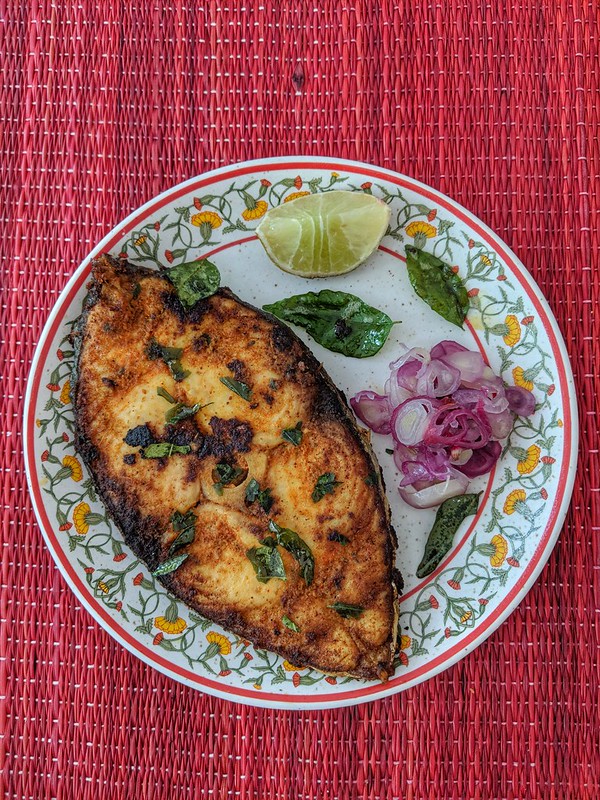
Fish fry

IMG_20180501_163225-01 
King fish- 250 gms (2 medium size steaks)

Marinade
Chilli powder- 3/4th tsp
Turmeric powder- 1/4 tsp
Fennel seeds- 1/4 tsp
Peppercorns- 1 tsp
Coriander powder-2 tsp
Lemon juice- 1 tsp
Ginger- 1 inch piece, peeled and roughly chopped
Garlic- 4 medium pods, peeled
Indian shallots- 4, peeled and roughly chopped
Curry leaves- 6 to 8 leaves + enough to garnish
Salt- to taste

Oil- to shallow fry

Into a blender add all the marinade ingredients and blend to a fine paste, without adding any water.
Its ok if the garlic and ginger haven't been ground to bits, some pieces here and there are fine.
Check for salt, add if needed.
Generously rub both sides of the steak with the marinade and keep covered in the refrigerator for about an hour.
Heat oil in a frying pan, and fry the fish on medium heat, about 2 minutes on each side, or depending on the thickness of the steak. Don't over cook it, or else the fish becomes hard.
Towards the end of the frying time, add some curry leaves into the oil for added flavour.
Scoop them out and crumble on top of the fish before serving.
I served mine with a side of pickled onions and a squeeze of lime juice.
You can use this marinade for any fish, mackerel, anchovies, tuna steak, any oily fish.