Showing posts with label kerala. Show all posts

Tuesday, 11 February 2020

Meat pattichu varuthathu

Adapted from Mrs K. M Mathew's book Flavours of the Spice Coast
 Beef- 1 kg*, cut into medium size pieces

To roast and grind
Fennel seeds- 1 1/2 tsp
Cinnamon stick- 2 inch piece
Cloves- 6
Peppercorn- 2 tsp
Kashmiri chilly powder- 2 tsp
Turmeric powder- 1 tsp
Coriander powder- 3 1/2 tsp

Ginger garlic paste- 2 tsp
Vinegar- 2 tsp
Salt- to taste

Coconut oil- 1 tbsp
Mustard seeds- 1 tsp
Curry leaves- 2 sprigs
Shallots- 10 to 12, roughly chopped
Ginger- 2 tbsp, sliced
Garlic- 5 cloves, sliced

Dry roast all the ingredients in the roast section for about 3 to 4 minutes on medium heat. Keep stirring continuously or else you will end up burning the spices.
Once slightly cool, grind them finely.
Remove 1 tsp of this powder and to the rest add the ginger garlic paste, vinegar and salt.
Marinate the meat with this mix, and keep aside for an hour or so. 
Transfer the meat to a pressure cooker and cook with about half cup water till done. 
(I close the lid and cook on high till steam comes after which i put on the weight and wait for the first whistle. Once the first whistle is out, i reduce heat to medium and cook for about 15 minutes. For the beef we get here, this method works well).

Open the pressure cooker, and if there is a lot of liquid, evaporate most of it on high heat, leaving about a quarter cup of liquid with the meat.
Heat coconut oil in a large wok and add mustard seeds.
Once they splutter, add curry leaves, shallots, sliced ginger and garlic and cook till slightly brown and the raw smell from the ginger and garlic disappears.
Add the reserved tea spoon of masala powder to the onions and saute for a few minutes.
Finally, tip in the beef along with the gravy and fry on medium heat till dark and semi dry. I dont like my beef too dry, but with some wet masala smothering it.
The masalas will start leaving the sides of the pan, and there will be some oil visible around the pan. At this point, you can add some more fresh curry leaves, give a final mix and take it off the flame.
Serve hot with Kerala porotta or rice and moru kachiyahu.
Notes: The preparation is just moderately spicy, you can increase the pepper and red chilly powder to suit your taste
*The beef i used here is a roasting joint which has a nice layer of fat. Please do yourself a favour and use beef with a bit of fat, for this recipe. Trust me, it makes a difference.
I also added a few beef short ribs just to see what its like. I personally think it didnt make too much of a difference, however if it was a curry i was making, it would have amped up the taste. 
You can do the entire prep in a normal pot, but cooking time is longer and also make sure you add at least 2 to 3 cups of water to the beef while cooking, so it doesnt dry out.
You can try the same with mutton as well, and it tastes great.
Friday, 30 March 2018

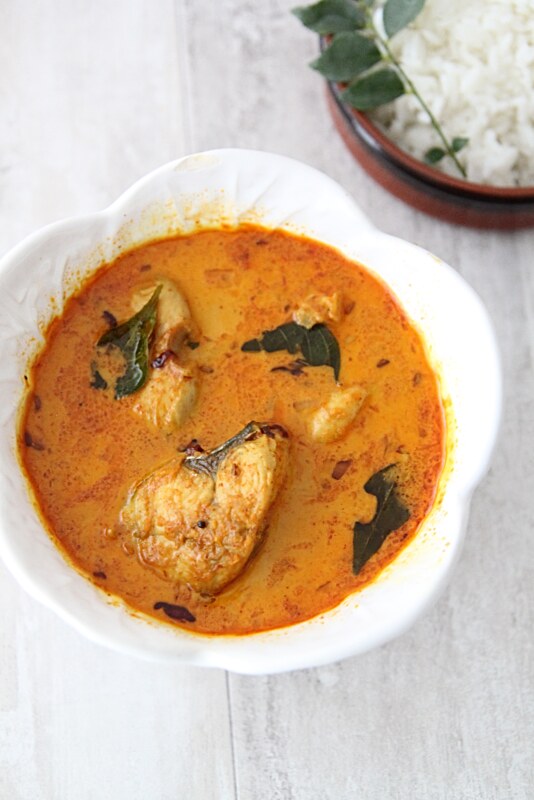
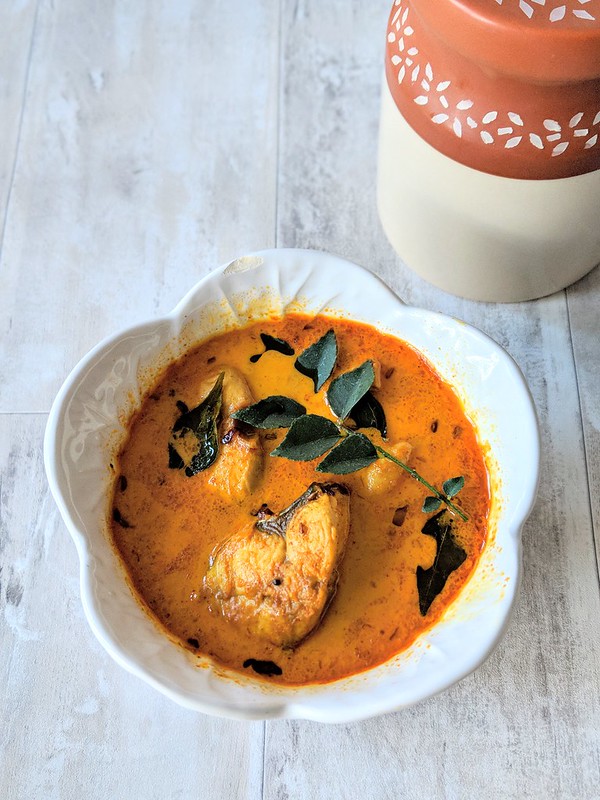
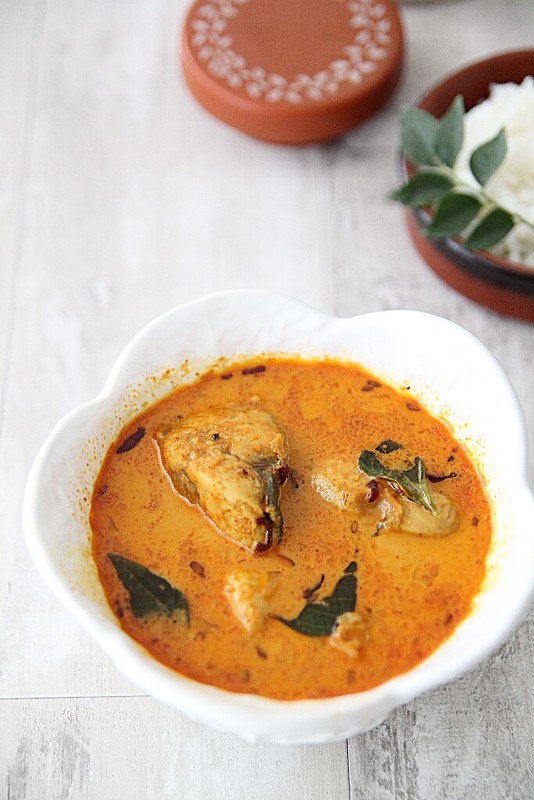
Kerala fish curry with coconut milk

Recipe adapted from here
00100dPORTRAIT_00100_BURST20180328162027353_COVER (1) 
King fish/ seer fish- 500 gms cleaned and cut into small curry pieces. Its ok if they are slightly larger steak pieces as well.
Coconut oil- 2tbsp (use any refined oil, but coconut oil makes a world of a difference)
Shallots- 10 to 12, peeled and halved
Ginger- 1 inch piece, peeled
Garlic- 6 to 7 medium size pods, peeled
Green chilli- 1, add more if you would like the curry to be spicy
Curry leaves- 1 sprig
Turmeric powder- 1 tsp
Coriander powder- 1 tbsp
Kashmiri chilli powder- 1 tbsp
Fenugreek powder- a little less than 1/2 tsp
Tomato- 1 medium, finely chopped
Malabar tamarind (kudampuli)- 3 medium
Thinned out coconut milk- 2 cups (refer notes)
Thick coconut milk- 1/2 cup

To temper
Coconut oil- 1 tbsp
Mustard seeds- 1/2 tsp
Cumin seeds- 1/2 tsp
Curry leaves- 1 sprig
Shallots- 2 tbsp
Turmeric powder- a generous pinch (optional, but imparts a nice flavour)
9d4194a1-11c0-4b26-bc7b-2ebeb4065e56
Soak the tamarind pieces in 1/2 cup warm water.
Coarsely grind together the shallots, garlic, ginger and green chilli or crush them all together using a pestle and mortar. Dont make it into a paste.
Heat oil in a kadai and throw in the ground shallot mix along with a curry leaf sprig.
Cook on medium heat till they dont smell raw anymore and the onions have caramelised slightly. They dont need to brown.
Add the turmeric, coriander, kashmiri chilli and fenugreek powder. Add a dash of water and cook for about a minute or so.
Throw in the diced tomato and cook till they turn mushy and the oil begins to surface around the sides.
Pour in the tamarind along with its water, the thinned out coconut milk, enough salt, and bring to a boil, covered.
Once it boils, add the fish slices, give a gentle mix and cover and continue cooking for about 15 minutes or till they are cooked through.
Open lid and add the thick coconut milk. Swirl the pan. Dont mix with a ladle as the fish slices may break. 
Boil for a few minutes on medium heat and then turn off the heat. Dont heat the curry a lot after you've added the thick coconut milk, as it could change the taste of the curry, or split.

In another small pan, heat the coconut oil to temper/
Add mustard seeds, let it crackle, followed by cumin seeds and curry leaves.
Stir for a few seconds and add the shallots and turmeric powder. Saute till they turn slightly brown.
Immediately pour over the fish curry. Swirl the pan, and keep covered till ready to eat.
Best had with steamed rice.
f1353161-a531-4544-9b4b-c350141aa818
Notes: If using coconut milk from a can or coconut cream, remove 1/2 cup of thick milk/cream and to the rest add enough water to make it 2 cups. Stir well and then add to the curry. This is the thin coconut milk. The 1/2 cup kept aside is to be used at the end.
I gently nudge the tamarind between my fingers before pouring it into the curry so that the juices get released a bit. I also pass this through a sieve to catch any mud or sediment from the tamarind.
I also remove 2 of the tamarind pieces from the curry after its done, as i find they end up being too sour if left in there. You can of course leave them in there if you prefer it that way.
Curry is not spicy, add green chilli accordingly.
The curry can be left at room temperature for a day or so. Reheat on low heat before using.
Needless to say, the curry tastes best the next day or even the day after.

Thursday, 24 August 2017

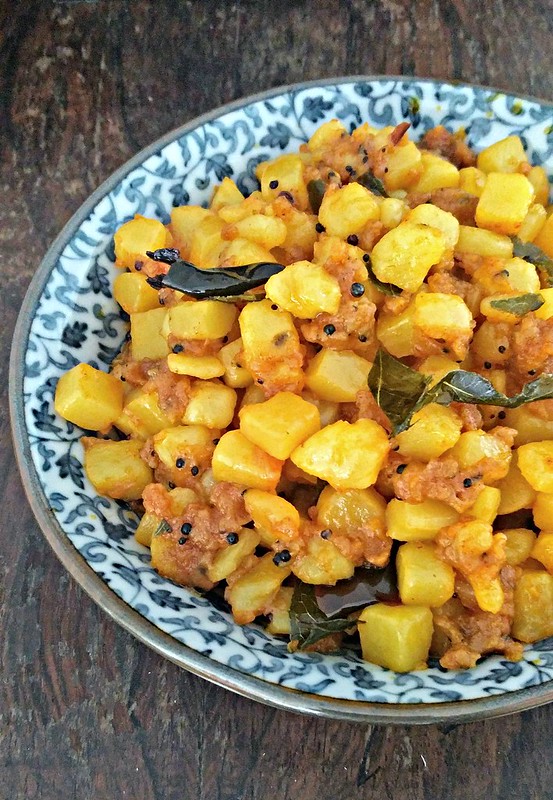
Simple potato fry

IMG_20170823_j163215 
My mum makes this potato fry back home and its so so tasty, i can eat just that and rice and be content. Its a very simple recipe with not a lot of ingredients but you will need patience to make it, as it needs a wee bit of slow roasting. 

Serves 3-4 as part of side dish
Potato- 2 large, peeled and sliced into small cubes
Coconut oil- 2 tbsp
Mustard seeds- 1/2 tsp
Dried red chillies- 3
Curry leaves- 2 sprigs
Kashmiri chilli powder- 1 1/2 tsp
Turmeric powder- 1/2 tsp
Water- 1/4 cup
Salt- to taste

Slice the potatoes into small cubes. The trick here is to try and get them all as uniformly as possible. My mum cubes them much smaller which is even better.
Heat coconut oil in a frying pan and splutter mustard seeds followed by dried red chillis (break them in half) and curry leaves. 
Keeping heat on medium low, stir for a few seconds and then add the potato.
Saute well with the infused oil, preventing the potato from sticking to the pan.
Add the chilli powder, turmeric powder and salt and mix well with the potatoes, making sure they are all coated well with the masala.
Pour in water, give a final stir and close with a lid. 
Cook on medium/low heat, stirring in between carefully without breaking the potatoes.
Once they are partially cooked, open the lid and continue cooking till the water evaporates and the masalas are dry and coats the potato. 
On medium low heat again slow roast it, till the sides of the potatoes slightly crisp up. It takes a while, but don't skip this step as that's what makes it taste so much better. Scrape the base of the pan to get all the masalas off it.
Serve with rice, moru kachiyathu and pappadam.

Notes: Be extremely careful while saunteeing the potatoes as they will easily break and become a mushy mess.
You can add a tsp of coconut oil and curry leaves towards the end for some extra taste, but i avoided it.
Coconut oil imparts that gorgeous taste, so do try with it or a mix of coconut and vegetable oil at least.

Monday, 20 March 2017

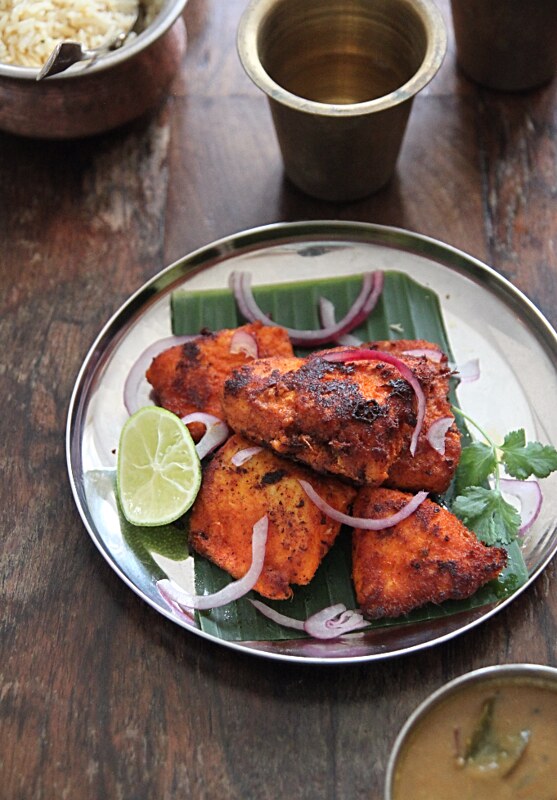
Kerala fish fry

ce7eeb7e-622e-4311-b96d-23395a97832a 
Serves 2 as part of side dish 
Fish fillets- 350 gms, sliced (around 4 big pieces). I used Basa fillets. King fish or any firm fish would be ideal.
Chilli powder- 3/4th tbsp
Turmeric powder- 1/2 tsp
Fennel powder- a generous pinch
Ginger garlic paste- 1/2 tbsp
Lime juice- 1 tbsp
Salt- to taste
Oil- enough to shallow fry
Curry leaves- a sprig (optional)
Lemon wedges and sliced onions to serve

Make a paste with all the ingredients except oil.
Add a wee bit of water if required, but make sure its not too loose.
Apply the marinade generously on all the fish slices and keep aside for about 15-20 minutes.

Heat oil in a frying pan and slide in the fish slices, in batches if needed.
Keep the heat on medium and shallow fry, flipping it over after a while.
Once the fish has browned on both sides and cooked well, remove and drain on paper towels.
Don't over cook the fish or it will become hard. 
Throw in some curry leaves while frying for some extra flavour.
Serve with lemon wedges and sliced onions.